2026-11-10 ·
How Atmospheric River Storms Cause Home Flooding on the Peninsula
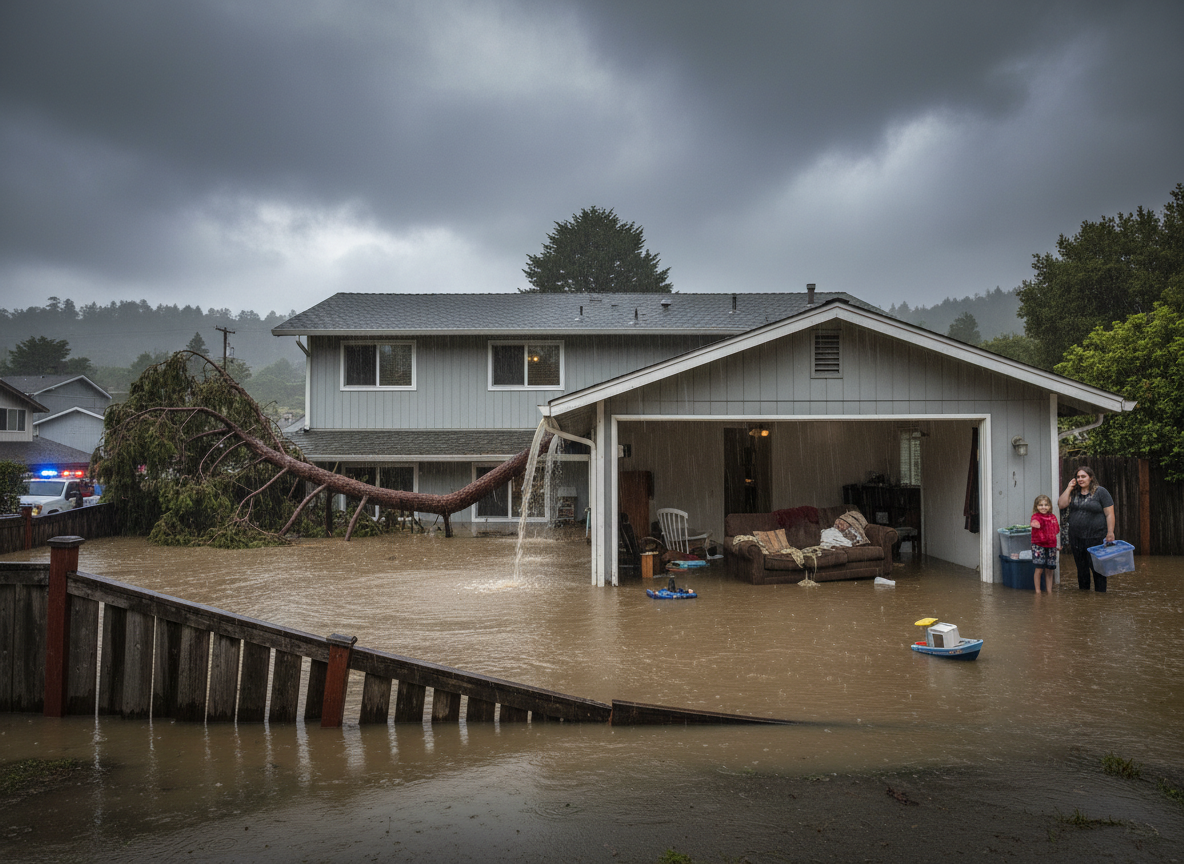
Atmospheric river storms cause home flooding on the Peninsula when they drop 4–8 inches of rain in 24–48 hours over San Mateo County, saturating soil and exceeding the capacity of storm drains built for milder Mediterranean patterns. These narrow bands of moisture funnel directly into neighborhoods like Downtown Redwood City, North Fair Oaks, and Redwood Shores, where older housing stock from the 1950s–1970s often lacks modern grading or sump systems. The result is surface water that enters crawl spaces, garages, and first floors before crews can respond.
How Atmospheric Rivers Form and Reach the Peninsula
Atmospheric rivers originate over the Pacific and carry water vapor equivalent to 10–20 Mississippi Rivers. When they make landfall near the Bay Area, the coastal hills force the moisture upward, releasing it in short, intense bursts. In San Mateo County this often means 2–4 inches falling within six hours, far above the 0.5-inch hourly rate most local gutters and street drains were designed to handle. Redwood City’s flat zones near Redwood Shores Lagoon collect this runoff from higher terrain in Woodside Plaza and Edgewood, turning streets into temporary rivers that back up against home foundations.
Drainage Limits in Redwood City Neighborhoods
Many homes in North Fair Oaks and Farm Hill sit on lots with minimal slope, so water pools against slab edges and crawl-space vents. Storm drains along El Camino Real and near Sequoia Station frequently surcharge during these events because the pipes were sized for the region’s usual cool, foggy summers rather than concentrated winter deluges. Once water enters a crawl space it migrates toward lower points, soaking insulation and subflooring within hours. Residents in Belmont and Menlo Park report the same pattern when the same atmospheric river tracks a few miles north or south.
Soil Saturation and Foundation Pathways
Peninsula clay soils hold water for days after an atmospheric river passes. In Redwood Shores and Edgewood this prolonged saturation exerts hydrostatic pressure on foundation walls, forcing moisture through hairline cracks that formed decades ago. Older homes in Downtown Redwood City often have brick or concrete foundations without modern waterproofing membranes, so water finds seams at utility entries and around window wells. The result is standing water in basements or crawl spaces that requires extraction before mold sets in.
Secondary Effects on Local Infrastructure
When storm drains back up, water also flows into sewer laterals, raising the risk of sewage intrusion in low-lying blocks of North Fair Oaks. Cañada College’s hillside runoff adds volume to already stressed channels that empty near Woodside Plaza. Homeowners who ignore early signs such as water stains on garage floors or musty odors in crawl spaces often face larger repairs after the next storm. Checking crawl space water damage signs homeowners miss helps identify these issues before they compound.
Practical Response During and After the Storm
During an atmospheric river, clearing debris from roof gutters and downspouts reduces the volume that reaches the foundation. Once water enters the home, prompt removal of standing water limits damage to flooring and drywall. Local crews familiar with Redwood City’s housing stock know which neighborhoods need extra attention to sump pumps and French drains. For guidance on immediate actions, see what to do in the first 24 hours after water damage.
Redwood City Water Restoration operates 24/7 and focuses on water damage restoration and flood cleanup tailored to San Mateo County conditions. Addressing the specific pathways atmospheric rivers create—saturated soil, overwhelmed drains, and older foundations—prevents repeated flooding in the same properties year after year.